Best Testosterone Booster for Men Over 40
Quick Answer: What Is the Best Testosterone Booster for Men Over 40?
The best testosterone booster for men over 40 corrects common shortfalls first, vitamin D, zinc and magnesium, then layers evidence-backed botanicals like standardized tongkat ali and ashwagandha. No pill is magic. The strongest results come from a transparently dosed formula paired with fat loss, resistance training and quality sleep, which move levels more than any capsule.
- Foundation first: fix low vitamin D, zinc and magnesium.
- Best botanicals: standardized tongkat ali and ashwagandha.
- Multipliers: lose body fat, lift weights, sleep 7 to 9 hours.
If you are searching for the best testosterone booster for men over 40, you have probably noticed the changes that prompt the search: energy that fades by mid-afternoon, workouts that feel harder for less reward, a libido that is not what it was, and a waistline that expands no matter what the scale says you deserve. Those shifts are common after 40, and they are not just in your head. Testosterone declines gradually with age, and the crossover into your forties is often when the slide becomes something you actually feel.
This is an age-focused buying guide, written by an independent publisher rather than a manufacturer. The goal is to tell you what genuinely helps a man over 40, what to prioritize on a label, and where the honest ceiling sits, so you can spend on the things that work and skip the things that do not.
Why testosterone declines after 40, and why it matters
Testosterone peaks in early adulthood and then eases downward at a steady, unglamorous pace. Research generally puts the decline at roughly one percent per year after age 30, which sounds trivial until you do the math across a decade or two. By the time a man is in his forties, that slow drip has added up, and it stacks on top of the other things midlife brings: more stress, worse sleep, less spontaneous physical activity, and a tendency to carry more body fat. The result is that a meaningful share of older men sit in the low-normal range, roughly 40 percent of men aged 45 and over have low-normal testosterone by some estimates, without ever crossing into a formal diagnosis.
Why does that matter for choosing a booster? Because it changes who responds. A lean, well-rested 25-year-old with optimal levels has very little room for a supplement to move. A 45-year-old with borderline levels, a vitamin D deficiency and five-hour nights has plenty of room. Men over 40 are frequently the best responders to natural approaches, precisely because they are starting from a lower baseline. If you are unsure whether you are in that group, our rundown of the signs of low testosterone in men and the symptoms to watch is a good place to check yourself before you buy anything.
What to prioritize on the label after 40
The supplement aisle is loud, but the short list of ingredients worth your money after 40 is genuinely short. Prioritize these four, and treat everything else as optional.
Vitamin D: the foundation most men are missing
Vitamin D functions more like a hormone than a vitamin, and low status is common, especially in men who work indoors, live at higher latitudes, or are heavier. Correcting a genuine deficiency has been linked to improved testosterone in several studies, although the benefit is much weaker in men who already have adequate levels. This is the classic "fix what is low" ingredient: worth including, worth testing, not worth megadosing.
Zinc and magnesium: the working minerals
Zinc is directly involved in testosterone synthesis, and outright deficiency drags levels down; magnesium shortfalls are widespread and associated with lower total and free testosterone in some research. Both are minerals where correcting a gap helps and overdoing it does not. A sensible over-40 formula includes them at food-plus-modest levels rather than the eye-watering doses used as a marketing gimmick. For the deeper dive, our guide to zinc and vitamin D for testosterone in men explains why deficiency correction, not overloading, is the point.
Standardized tongkat ali: the lead botanical
Among the herbs, standardized tongkat ali (Eurycoma longifolia) has the strongest human evidence for supporting testosterone and stress markers, and notably, the trials that look best are often in older or stressed men, exactly the over-40 reader. The word that matters most is "standardized": the extract should be standardized to its active compounds so you are getting a consistent, effective dose rather than ground-up root of unknown strength.
Ashwagandha: the stress and sleep angle
Ashwagandha (Withania somnifera) is an adaptogen with better evidence for lowering stress and improving sleep than for directly spiking testosterone, but for a man over 40 that indirect route matters. Chronic stress raises cortisol, and cortisol is testosterone's antagonist; sleep loss suppresses the overnight production window. By calming both, ashwagandha can support the hormonal environment even where its direct effect is modest.

Built for the Over-40 Checklist
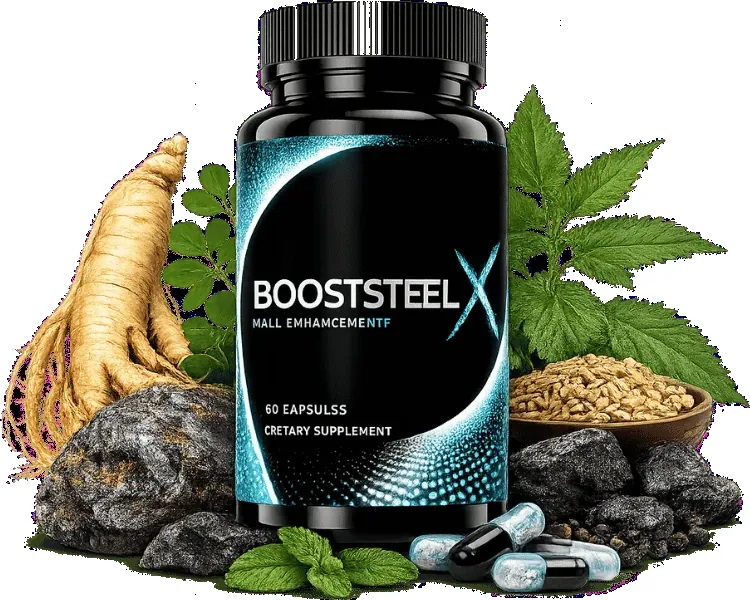
BoostSteelX brings standardized tongkat ali, Korean red ginseng, ashwagandha and supporting nutrients together in one transparently dosed daily formula.
Get OfferThe lifestyle multipliers that amplify any booster
Here is the part the ads leave out: after 40, the supplement is the smaller lever. The bigger levers are free, and they multiply whatever a booster can do. Skip them and even the best formula underperforms; use them and a modest supplement becomes genuinely worthwhile.
Losing body fat is the single biggest move
Fat tissue is hormonally active. It contains aromatase, the enzyme that converts testosterone into estrogen, so carrying excess weight actively drags testosterone down. The upside is that the reverse is also true. Weight-loss studies in men with excess body fat regularly show testosterone rising as the fat comes off, and losing roughly 10 percent of body weight can add on the order of 60 to 90 ng/dL. No ingredient in this article comes close to that effect. For a man over 40, dropping excess weight is very often the highest-yield thing on the entire list.
Resistance training and sleep, the reliable pair
Lifting weights builds and preserves muscle, improves insulin sensitivity and supports the hormonal picture over time; compound movements with progressive load are the proven route, and they matter more after 40 as muscle becomes harder to hold. Sleep is the other half. Most testosterone is produced during sleep, and controlled studies show that restricting healthy men to around five hours a night for a week can lower daytime testosterone by 10 to 15 percent. Seven to nine hours of quality sleep is not a soft recommendation; it is a hormonal necessity. Our practical guide to raising testosterone naturally with diet and exercise lays out how to stack these habits.
Booster vs TRT: knowing which conversation you are in
A fair guide has to name the boundary. A natural testosterone booster is a supporting supplement for a man with low-normal or suboptimal levels who wants an evidence-based nudge on top of good habits. Testosterone replacement therapy (TRT) is a prescription medical treatment for diagnosed low testosterone, managed and monitored by a clinician. They are different tools for different situations, and one is not a weaker version of the other. If you want to understand where each fits and the tradeoffs involved, our comparison of TRT versus a natural testosterone booster lays out the decision honestly. The short version: a supplement cannot replace TRT, and if your symptoms are significant, the right first step is testing, not a bottle.

How to choose your bottle: an over-40 buying checklist
Bring the same skeptical eye to a testosterone booster that you would to any purchase over 40. Run each candidate through this checklist. First, are the doses disclosed per ingredient, or hidden inside a proprietary blend that could be fairy-dusted? Transparency is non-negotiable. Second, does it include the foundation, vitamin D, zinc, magnesium, at sensible amounts rather than reckless megadoses? Third, is the tongkat ali standardized to its active compounds, and is the ashwagandha a recognized extract? Fourth, is it made in a GMP-certified facility, the baseline manufacturing standard? Fifth, does the marketing stay honest, supporting normal testosterone and vitality, rather than promising to double your levels or reverse aging? A product that clears all five is doing the job; one that stumbles on dosing transparency or overpromises in the copy is one to skip.
Judged against that checklist, BoostSteelX is designed to fit the over-40 profile: standardized tongkat ali and Korean red ginseng for drive and hormonal support, ashwagandha for the stress and sleep angle, and supporting nutrients, with the label laid out so you can see what you are actually taking. It is a supporting layer, not a substitute for the fundamentals, and it is honest about that, which is exactly what you want from a formula at this stage of life.
Medical note: this article is general information, not medical advice. If you are over 40 with persistent symptoms of low testosterone, ask a doctor for a morning blood test rather than self-treating. Speak to a healthcare professional before starting any supplement, especially if you take medication or manage a health condition.
Frequently asked questions
What is the best testosterone booster for men over 40?
The best testosterone booster for men over 40 is one that corrects common shortfalls and layers evidence-backed botanicals: vitamin D, zinc and magnesium as a foundation, plus standardized tongkat ali and ashwagandha. No single pill is magic, so the best choice is a transparently dosed formula paired with sleep, resistance training and fat loss, which do most of the heavy lifting after 40.
Do testosterone boosters still work after 40?
They can, and men over 40 are often the best responders because they are more likely to start with low-normal levels or a nutrient deficiency. Correcting a real gap in vitamin D, zinc or magnesium, and adding standardized tongkat ali or ashwagandha, tends to produce a modest, gradual improvement rather than a dramatic spike. The effect is real but not drug-strength.
How can men over 40 raise testosterone naturally?
The biggest natural levers after 40 are losing excess body fat, sleeping seven to nine hours, and doing regular resistance training. Losing about 10 percent of body weight can add roughly 60 to 90 ng/dL. Correct a vitamin D, zinc or magnesium deficiency, manage stress, and use a quality booster as a supporting layer on top of those fundamentals.
When should a man over 40 see a doctor about low T?
See a doctor if you have persistent symptoms such as low libido, fatigue, mood changes, muscle loss or erectile difficulty, especially if they interfere with daily life. Ask for a morning blood test of total and free testosterone. Only a clinician can diagnose low testosterone and decide whether treatment is warranted; a supplement is not a substitute for that assessment.
Scientific references
- NIH NIDDK — Weight management and metabolic health
- JAMA — Effect of 1 week of sleep restriction on testosterone in young men
- NIH Office of Dietary Supplements — Vitamin D fact sheet
- NIH Office of Dietary Supplements — Zinc fact sheet
- PubMed — Eurycoma longifolia (tongkat ali) clinical reviews
- Cleveland Clinic — Low testosterone (male hypogonadism)
See How BoostSteelX Fits the Over-40 Checklist
Standardized tongkat ali, ginseng, ashwagandha and supporting nutrients in one daily formula — every ingredient and its evidence laid out.
Get Offer