Muira Puama and Saw Palmetto in BoostSteelX: Separating the Seller's Stat Claims From the Published Evidence
What do muira puama and saw palmetto actually have evidence for?
Muira puama's evidence base is almost entirely animal and cell research on nitric oxide signaling in penile tissue, plus decades-old ethnobotanical surveys — not a controlled human trial. Saw palmetto's evidence base is the opposite problem in a different direction: it has been studied extensively in humans, but almost all of that research is about prostate and urinary symptoms, not testosterone or libido, and the largest, best-controlled trial found no benefit over placebo. BoostSteelX lists both only as unspecified extracts with no amount printed for either.
- Muira puama: mostly preclinical (animal/cell) evidence on erectile-relevant signaling; no dedicated human trial found.
- Saw palmetto: extensively studied in humans — but for prostate/urinary symptoms, and the largest trial showed no benefit over placebo.
- Named percentages (such as a specific share of men reporting improvement) are the seller's own marketing claim, not an independently verified result.
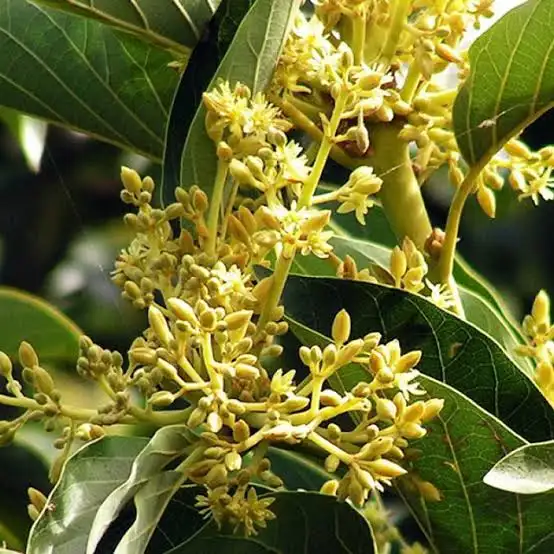
What BoostSteelX actually lists for these two ingredients
The sales page names muira puama as “Muira Puama — Root Extract” and saw palmetto as “Saw Palmetto — Berry Extract.” That is all. There is no milligram figure, no percentage of any active marker compound, and no statement of whether either ingredient sits inside a combined proprietary blend with the rest of the formula. There is also no Supplement Facts panel published anywhere in the sources available for this product — not on the sales page, not on the legal pages, not on the checkout flow. Whatever dose is actually in a BoostSteelX capsule, it is not disclosed to the person buying it, and neither we nor the third-party review site that covers this product could find a label image that says otherwise.
The seller's marketing copy does attach specific, memorable statistics to some ingredients — including a named percentage of men reporting improvement tied to muira puama. That kind of number should be read as exactly what it is: a claim made by the company selling the product, not a citation to a peer-reviewed clinical result. We could not locate a published trial that produced that figure, and per our own editorial standard, we do not repeat seller statistics as verified fact.
Muira puama: what the actual research measured
Muira puama, botanically Ptychopetalum olacoides, is a small tree native to the Amazon basin, traditionally brewed as a tonic for fatigue, nervous exhaustion and, per folk use, sexual complaints. Its modern research record is smaller and more preclinical than several other ingredients in this formula.
The most directly relevant studies come from a research group that tested muira puama, often in combination with ginger, L-citrulline and guarana (Paullinia cupana), on the nitric oxide–cGMP signaling pathway in penile smooth muscle. A 2018 in-vitro study examined how these ingredients, singly and combined, modulated inducible nitric oxide synthase and the NO-cGMP pathway in rat penile smooth muscle cells — the same signaling pathway relevant to erectile function.[1] A related 2015 study tested the same combination in an aging rat model and reported that treatment reversed some age-related loss of corporal smooth muscle and fibrosis in that model.[2] Both are legitimate, peer-reviewed findings — and both are animal and cell-based, testing a multi-ingredient combination rather than muira puama alone, which makes it hard to credit any single-ingredient effect from these papers specifically.
Separately, an older line of research examined muira puama's traditional “tonic” reputation more directly: a 2010 study found anti-stress effects from Ptychopetalum olacoides in mice, using standard behavioral stress models.[3] That supports the traditional fatigue/tonic use case more than it supports a specific sexual-performance claim. A 2020 pharmacology review of herbal sexual enhancers more broadly, covering psychiatric and neurological adverse effects across this category of botanicals, is a useful companion safety reference, since “natural” tonics are not automatically risk-free.[4]
What we did not find, after a broad search of PubMed-indexed literature, is a controlled human clinical trial of muira puama alone, at a stated dose, measuring erectile function, libido or any comparable outcome in men. That is a real gap. It does not mean muira puama does nothing — it means the specific, memorable percentage-of-men claims attached to it in marketing material go well beyond what the published science has actually tested.
Muira puama evidence at a glance
| Study | What it tested | What it found |
|---|---|---|
| Ferrini et al., 2018[1] | Muira puama, ginger, guarana, L-citrulline — singly and combined — on NO-cGMP signaling in rat penile cells | Modulated the pathway in vitro; a mechanism study, not a human outcome trial. |
| Ferrini et al., 2015[2] | Same combination in an aging rat model | Reported reversal of some smooth-muscle loss and fibrosis in aging rat tissue. |
| Piato et al., 2010[3] | Muira puama alone, anti-stress behavior in mice | Supports a general “tonic”/anti-stress effect in an animal model; not a sexual-function measure. |
| Human clinical trial of muira puama alone | Not located in a PubMed search at time of writing. | |
Saw palmetto: heavily studied, but for a different question
Saw palmetto (Serenoa repens) is a genuinely well-researched botanical — just not for the outcome male-enhancement marketing usually implies. The overwhelming majority of the clinical trial literature on saw palmetto concerns benign prostatic hyperplasia (BPH) and lower urinary tract symptoms (LUTS): urinary flow, nighttime urination frequency and related prostate-health measures in older men. It is not studied as a testosterone booster, and it is not marketed that way in the peer-reviewed literature.
The single largest and most rigorous trial is instructive. The NIH-funded CAMUS study, published in JAMA in 2011, tested increasing doses of saw palmetto extract — up to three times the standard dose — against placebo in men with lower urinary tract symptoms, and found no significant improvement over placebo at any dose tested.[5] A 2012 Cochrane systematic review, one of the most rigorous forms of evidence synthesis in medicine, reached a similarly cautious conclusion: across the pooled trial data available at the time, saw palmetto did not outperform placebo for LUTS by a clinically meaningful margin.[6] More recent work complicates the picture only slightly, and not by reversing it. A 2021 systematic review and meta-analysis pooling 27 trials found that Serenoa repens alone still produced little to no meaningful difference from placebo on urinary symptoms, quality of life or adverse events — consistent with CAMUS and the Cochrane review. That same 2021 review did flag one uncertain signal: when Serenoa repens was combined with other phytotherapy ingredients (not used alone), there was a possible, short-term reduction in urinary symptoms, though the authors rated that result uncertain rather than established.[7] Separately, a 2026 narrative review raises a different point — that different Serenoa repens extracts (hexane-extracted versus alcoholic or supercritical CO2, for example) may not be pharmacologically equivalent, which could help explain some of the inconsistency across older trials that didn't distinguish extraction method. Neither paper reports a testosterone-related outcome, and neither overturns the core finding that saw palmetto alone does not reliably beat placebo for LUTS.[8]
None of this literature, old or new, measures testosterone as an outcome. Saw palmetto's proposed mechanism actually runs the other direction from a testosterone-boosting story: it has been studied as a mild inhibitor of 5-alpha-reductase, the enzyme that converts testosterone to dihydrotestosterone (DHT), which is the theoretical basis for its use in BPH and sometimes in hair-loss formulas. That mechanism, if anything, is closer to modulating androgen conversion locally in prostate tissue than to raising testosterone levels systemically. Readers curious about what markers actually do move the needle on measured testosterone may find our piece on boron and free testosterone evidence a useful contrast in how differently an ingredient's real trial data can read compared to its marketing framing.
Saw palmetto evidence at a glance
| Study | Design | Finding |
|---|---|---|
| Barry et al. (CAMUS), 2011, JAMA[5] | Multi-center RCT, dose escalation to 3x standard | No significant benefit over placebo for LUTS at any dose. |
| Tacklind et al., 2012, Cochrane[6] | Systematic review of pooled RCT data | No clinically meaningful benefit over placebo across pooled trials reviewed. |
| Trivisonno et al., 2021[7] | Systematic review and meta-analysis, 27 trials | S. repens alone: little to no benefit vs placebo. Combined with other phytotherapy: an uncertain, possible short-term signal only. |
| De Nunzio et al., 2026[8] | Narrative review of extract types | Notes extraction method (hexanic vs alcoholic vs CO2) may explain inconsistent trial results; not a testosterone measure in any case. |
The seller's stat claim, and how to weigh it against this
When a sales page attaches a specific number — “62% of men reported improvement” is the kind of figure the fact sheet behind this article flags for muira puama — to a testimonial-style claim, it is worth asking a simple question: where does that number come from? Was it a company-run survey of buyers, a small internal study, or a citation to a published trial? BoostSteelX's own sources do not point to a published study behind that figure, and our search of PubMed-indexed literature did not find one either. That does not automatically make the number false, but it does mean it has not been independently verified, and per our editorial standard, we report it here only as the seller's own marketing claim — not as evidence.
The more useful comparison is the one this article has tried to make throughout: muira puama has real but preclinical, mechanism-level support; saw palmetto has extensive human trial data, but for a different health outcome (prostate/urinary symptoms) than the one implied by a male-enhancement sales page. Neither ingredient has been shown, in a controlled human trial, to move the needle on testosterone or to reproduce a specific percentage-of-men improvement figure. And because BoostSteelX does not print an amount for either ingredient, there is no way to check the dose against even the preclinical research that does exist.
Medical note: this article is general information, not medical advice, and is not a claim that BoostSteelX treats, cures or prevents any condition. Saw palmetto in particular can interact with hormone-related medications and anticoagulants; speak to a healthcare professional before starting any supplement, especially if you take medication or manage a prostate, hormonal or bleeding-related condition.
Scientific references
- Ferrini MG, Garcia E, Abraham A, et al. “Effect of ginger, Paullinia cupana, muira puama and l-citrulline, singly or in combination, on modulation of the inducible nitric oxide-NO-cGMP pathway in rat penile smooth muscle cells.” Nitric Oxide, 2018 Jun 1. PMID: 29551532.
- Ferrini MG, Hlaing SM, Chan A, Artaza JN. “Treatment with a combination of ginger, L-citrulline, muira puama and Paullinia cupana can reverse the progression of corporal smooth muscle loss, fibrosis and veno-occlusive dysfunction in the aging rat.” Andrology (Open Access), 2015 Jun. PMID: 26405615.
- Piato AL, Detanico BC, Linck VM, et al. “Anti-stress effects of the ‘tonic’ Ptychopetalum olacoides (Marapuama) in mice.” Phytomedicine, 2010 Mar. PMID: 19682881.
- Brunetti P, Lo Faro AF, Tini A, et al. “Pharmacology of Herbal Sexual Enhancers: A Review of Psychiatric and Neurological Adverse Effects.” Pharmaceuticals (Basel), 2020 Oct 14. PMID: 33066617.
- Barry MJ, Meleth S, Lee JY, et al. (CAMUS Study Group). “Effect of increasing doses of saw palmetto extract on lower urinary tract symptoms: a randomized trial.” JAMA, 2011 Sep 28. PMID: 21954478.
- Tacklind J, Macdonald R, Rutks I, et al. “Serenoa repens for benign prostatic hyperplasia.” Cochrane Database of Systematic Reviews, 2012 Dec 12. PMID: 23235581.
- Trivisonno LF, Sgarbossa N, Alvez GA, et al. “Serenoa repens for the treatment of lower urinary tract symptoms due to benign prostatic enlargement: A systematic review and meta-analysis.” Investigative and Clinical Urology, 2021 Sep. PMID: 34488251.
- De Nunzio C, Lombardo R, Franco A, et al. “Pharmacology, efficacy and safety of different extracts of Serenoa repens in patients with lower urinary tract symptoms and benign prostatic hyperplasia: a narrative review.” Minerva Urology and Nephrology, 2026 Apr. PMID: 42023747.
Frequently asked questions
Does muira puama really help 62% of men, as some marketing claims?
That figure is a seller marketing claim, not an independently verified clinical finding. No PubMed-indexed human trial of muira puama alone for erectile or sexual function was located to support a specific percentage-of-men statistic. Treat any named percentage attached to a testimonial-style claim as the seller's own marketing statement rather than a proven result until a published, controlled trial says otherwise.
Is saw palmetto actually linked to testosterone?
Not in the published research. Saw palmetto has been studied almost exclusively for benign prostatic hyperplasia and lower urinary tract symptoms, not for raising testosterone. The largest placebo-controlled trial, a National Institutes of Health-funded study, found no benefit over placebo even at three times the usual dose, and a Cochrane systematic review reached a similar conclusion. There is no solid human evidence tying saw palmetto to a testosterone increase.
What amount of muira puama or saw palmetto does BoostSteelX contain?
BoostSteelX's sales page lists muira puama as “Root Extract” and saw palmetto as “Berry Extract,” with no milligram amount, no standardization percentage and no blend total printed for either one. No Supplement Facts panel exists for this product in the sources available, so no dose can be confirmed.
Is there any human clinical trial of muira puama for sexual function?
A search of PubMed-indexed literature turns up animal and cell studies on muira puama's effects on nitric oxide signaling in penile tissue, plus older ethnobotanical surveys, but no well-controlled human clinical trial of muira puama alone for erectile or sexual function. The evidence for this specific use is preclinical.
Related reading
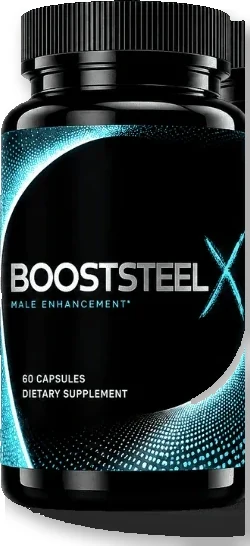
Order BoostSteelX
Ten botanicals and amino acids listed by the seller, including muira puama and saw palmetto extracts, in a two-capsule daily serving.
Order BoostSteelX