Foods That Boost Testosterone Naturally
Quick Answer: What Foods Boost Testosterone Naturally?
The foods that boost testosterone naturally are the ones supplying the nutrients your body uses to make it: zinc-rich oysters and lean beef, vitamin D-loaded eggs and fatty fish, and magnesium-heavy leafy greens. Add pomegranate and beets for blood flow, keep healthy fat in your diet, and limit alcohol and ultra-processed food.
- Feed the machinery: zinc, vitamin D and magnesium directly support testosterone synthesis.
- Don't fear fat: very low-fat diets can modestly lower testosterone.
- Pattern beats any one food: what you eat most days matters more than any superfood.
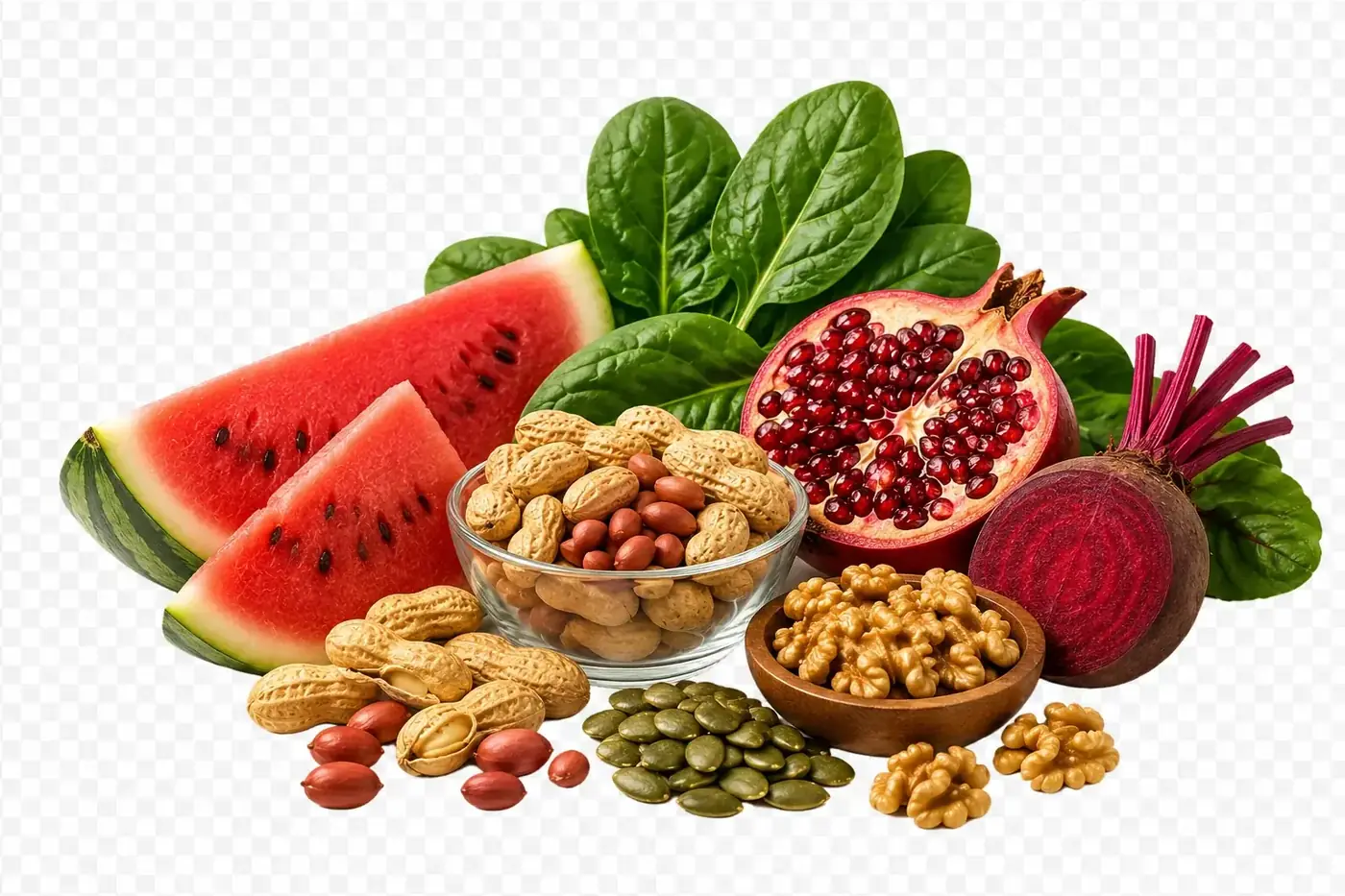
If you have searched for foods that boost testosterone, you have probably met two extremes: breathless lists promising a single "superfood" will transform your hormones, and cynics insisting food does nothing at all. Neither is right. Diet will not turn a normal man into a bodybuilder overnight, but it absolutely sets the stage. Testosterone is built from specific raw materials, and it falls when you are deficient in them, carrying excess body fat, or eating in a way that quietly works against you. Get the pattern right and you remove the drag; get it wrong and no supplement fully makes up the difference.
This guide is organised around a simple idea: eat the foods that supply what testosterone production actually needs, and cut back on the ones that undermine it. We are an independent publisher, not the manufacturer, so we would rather give you a grocery list that works than sell you a fantasy.
How food actually influences testosterone
Testosterone is not conjured from nothing. Your body assembles it from cholesterol and requires a supporting cast of micronutrients to run the assembly line. Three nutrients stand out because deficiency in any of them is common and each is directly involved in hormone production: zinc, vitamin D and magnesium. On top of that, total energy and dietary fat matter. Eat far too little, or strip fat down to almost nothing, and the body treats it as a signal to dial hormone output down. This is why crash diets and extreme low-fat regimens so often leave men feeling flat.
The honest framing is this: food mostly protects and supports normal testosterone rather than supercharging it. If you are already lean, well-fed and nutrient-replete, adding more oysters will not send levels soaring. But most men are not in that position, and for them, closing nutrient gaps is where the real, felt difference lives.
The best foods that boost testosterone naturally
Here are the categories worth building your plate around, grouped by the mechanism they support.
Zinc: oysters, red meat and shellfish
Zinc is arguably the headline mineral for male hormones. It is directly involved in testosterone synthesis, and outright zinc deficiency is a well-documented cause of reduced levels. Oysters are the single most concentrated food source by a wide margin, which is why they earned their old-fashioned reputation. If shellfish is not your thing, lean red meat, crab, and poultry are reliable everyday sources. The key nuance most lists skip: supplementing far beyond your needs does not push testosterone higher once you are replete, and very high zinc intakes can interfere with copper absorption. Aim to cover the requirement, not to megadose it.
Vitamin D: fatty fish and egg yolks
Vitamin D behaves more like a hormone than a vitamin, and low status is extremely common, especially in winter and at higher latitudes. Some studies link correcting a deficiency with improved testosterone, though results are mixed in men who already have adequate levels. Fatty fish such as salmon, sardines and mackerel are among the best food sources, and egg yolks contribute a useful amount alongside their healthy fat and cholesterol. Because sun exposure and food often fall short, vitamin D is one of the few nutrients where testing your blood level before deciding on a dose genuinely makes sense.
Magnesium: leafy greens, nuts and seeds
Magnesium is widespread in the diet in theory and widely under-consumed in practice. It has been associated with higher total and free testosterone in several studies, likely because it supports the fraction of testosterone that is biologically active rather than bound up in the blood. Spinach, Swiss chard and other dark leafy greens are excellent sources, as are pumpkin seeds, almonds and black beans. Magnesium also plays a role in sleep quality, which matters here because most testosterone is released while you sleep. Fixing a shortfall is sensible; there is no benefit to megadosing.
Pomegranate and beets: the nitric-oxide angle
Not every "T-boosting food" works through testosterone itself. Pomegranate and beets earn their place through nitric oxide, the molecule that helps blood vessels relax and widen. Beets are rich in dietary nitrate, which the body converts toward nitric oxide, and pomegranate is loaded with polyphenols studied for circulatory support. Better blood flow is part of what men are usually chasing when they think about "vitality," even when the number on a testosterone lab is unchanged. This is the same reasoning behind ingredients like L-citrulline, and it is worth understanding on its own terms; our explainer on the practical difference between the two amino acids covers it in our L-citrulline versus L-arginine nitric oxide comparison.
Don't skip healthy fats
Dietary fat is not the enemy of testosterone; it is a raw material for it. Olive oil, avocados, nuts and the fat in eggs and fish all provide the building blocks and fat-soluble vitamins hormone production relies on. The research here is nuanced rather than dramatic, but the practical takeaway is clear: an aggressively low-fat diet can modestly lower testosterone in some men, so keep sensible fats on the plate rather than fearing them.
Give your diet a targeted assist
Food covers the foundation. BoostSteelX pairs that foundation with tongkat ali, ginseng, ashwagandha and L-citrulline — every ingredient and its evidence laid out for you.
See the FormulaFoods to limit: what quietly drags testosterone down
The foods to cut back on matter as much as the ones to add, because they tend to work through body fat, the single biggest dietary lever for most men.
- Excess alcohol: Occasional drinking is one thing; heavy, regular intake is associated with lower testosterone and disrupted sleep, which compounds the problem. This is one of the clearest and most reversible offenders.
- Ultra-processed food and refined sugar: The issue is less any single ingredient and more the pattern. Diets built on these promote weight gain, and excess body fat is strongly linked to lower testosterone because fat tissue converts testosterone toward estrogen.
- Chronic calorie surplus: Eating well past your needs, even of "healthy" food, adds fat over time and works against you. The reverse is also true: losing significant excess weight is one of the most reliable ways to see levels rise.
Notice the theme. No single food is a villain you must ban forever. The damage comes from a repeated pattern that adds fat and crowds out the nutrient-dense foods above.
Three myths worth clearing up
Myth 1: One superfood will fix your testosterone
No single food, oysters included, moves the needle on its own. Hormones respond to the overall pattern of your diet, your body fat and your sleep, not to a heroic serving of one ingredient. Treat the foods above as a team, eaten consistently, rather than a magic bullet you take once and expect miracles from.
Myth 2: More zinc or vitamin D is always better
This is the most expensive myth. Correcting a genuine deficiency can raise testosterone; loading up when you are already replete does nothing useful and can backfire. Zinc in excess interferes with copper, and fat-soluble vitamins can accumulate. The goal is to fill gaps, then stop, which is exactly why a sensible supplement uses food-plus-modest doses rather than eye-watering megadoses.
Myth 3: Diet can replace a doctor
Food is powerful, but it is not a diagnosis. If you have persistent symptoms such as low energy, low drive or mood changes, those can have many causes, and only a blood test can tell you whether testosterone is actually involved. Use diet to remove the obvious drags and support normal production, and use a clinician to investigate anything that persists.
Where supplements fit alongside food
Whole food should always come first, because it delivers nutrients in a package your body handles well and fills you up in the process. But real life is messy: travel, appetite, food preferences and busy weeks all leave gaps. A well-formulated men's supplement is best understood as insurance against those gaps plus a modest, evidence-based tailwind from botanicals, not as a replacement for eating well. That is the philosophy behind natural testosterone boosters that actually work: fundamentals first, targeted support second.
BoostSteelX sits in that "targeted support" slot. It combines tongkat ali, Korean red ginseng, ashwagandha and L-citrulline, the last of which ties back to the nitric-oxide, blood-flow angle we covered with beets and pomegranate. Think of it as a way to reinforce a good diet on the days your plate falls short, not a licence to eat badly. If you want the fuller picture of how diet and training work together first, our companion piece on natural ways to increase testosterone with diet and exercise is the logical next read.
Medical note: this article is general information, not medical advice. Speak to a healthcare professional before starting any supplement, especially if you take medication or manage a health condition. Persistent symptoms deserve a proper diagnosis rather than self-treatment.
A realistic weekly plate
Pulling it together, a testosterone-supportive week is not exotic. It looks like eggs and fatty fish for vitamin D and healthy fat, lean red meat or shellfish for zinc, dark leafy greens, nuts and seeds for magnesium, beets and pomegranate for blood flow, and enough total food to avoid running on empty. Keep alcohol occasional, keep ultra-processed food to the edges, and let body fat trend down if it needs to. None of that is glamorous, which is exactly why it works while the miracle-food headlines do not.
Frequently asked questions
What foods increase testosterone the most?
There is no single magic food, but the biggest contributors are those rich in the nutrients testosterone production depends on. Oysters and lean red meat supply zinc, fatty fish and egg yolks provide vitamin D, and leafy greens deliver magnesium. Pair these with enough total calories and healthy fat, because chronic under-eating and very low-fat diets both work against testosterone.
Do eggs and red meat boost testosterone?
They can help, mainly by supplying the building blocks. Egg yolks contain vitamin D, cholesterol and healthy fat, all of which feed hormone production, and lean red meat is one of the best dietary sources of zinc. Neither is a testosterone drug, and eating far more than you need will not push levels higher, but including them in a balanced diet supports normal production.
Which foods lower testosterone?
The clearest offenders are excess alcohol and a diet built on ultra-processed food, refined sugar and surplus calories, because they promote the fat gain that drags testosterone down. Very low-fat diets can also modestly reduce levels in some men. No single food destroys testosterone overnight; the damage comes from a pattern that adds body fat and crowds out key nutrients.
Can diet alone fix low testosterone?
For some men, correcting a poor diet, losing excess fat and fixing a nutrient deficiency produces a meaningful rise. But diet alone cannot fix clinically low testosterone caused by a medical condition. If you have persistent symptoms, get a blood test and speak to a doctor rather than relying on food or supplements to diagnose or treat the problem.
Scientific references
- NIH Office of Dietary Supplements — Zinc fact sheet
- NIH Office of Dietary Supplements — Vitamin D fact sheet
- NIH Office of Dietary Supplements — Magnesium fact sheet
- NIH NIDDK — Weight management and metabolic health
- American Heart Association — Healthy eating guidance
- Cleveland Clinic — Low testosterone (male hypogonadism)
Support your diet with BoostSteelX
Tongkat ali, ginseng, ashwagandha and L-citrulline in one daily formula — a targeted complement to the foods on your plate.
Get Offer