Does Tribulus Terrestris Actually Raise Testosterone? What the Human Trials Measured
Does tribulus terrestris raise testosterone?
Mostly, no — not according to the largest trials that measured serum testosterone in men with normal baseline levels. What tribulus trials more often measured instead was erectile function questionnaires, satisfaction scores and subjective vitality, and several of those found improvement on those scales without a corresponding rise in measured testosterone. There is one real exception worth knowing about: a smaller placebo-controlled trial in men with diagnosed hypogonadism — a low-testosterone population by definition — did report a statistically significant testosterone rise alongside symptom improvement. The honest summary is that tribulus has real signal for symptom scores in several populations, weak-to-absent signal for raising testosterone in men who start with normal levels, and one specific low-baseline exception that keeps the question from being a flat no. BoostSteelX lists tribulus only as a “Standardized Extract” with no amount or marker compound stated.
- Serum testosterone: most trials in men with normal baseline levels found no significant increase, including the largest pooled meta-analysis.
- The one exception: a placebo-controlled trial in hypogonadal (low-T) men did find a significant testosterone rise.
- Symptom/satisfaction scores: several trials found improvement on these measures, independent of T levels.
- The gap to watch: a study improving a questionnaire score is not the same as a study raising testosterone.
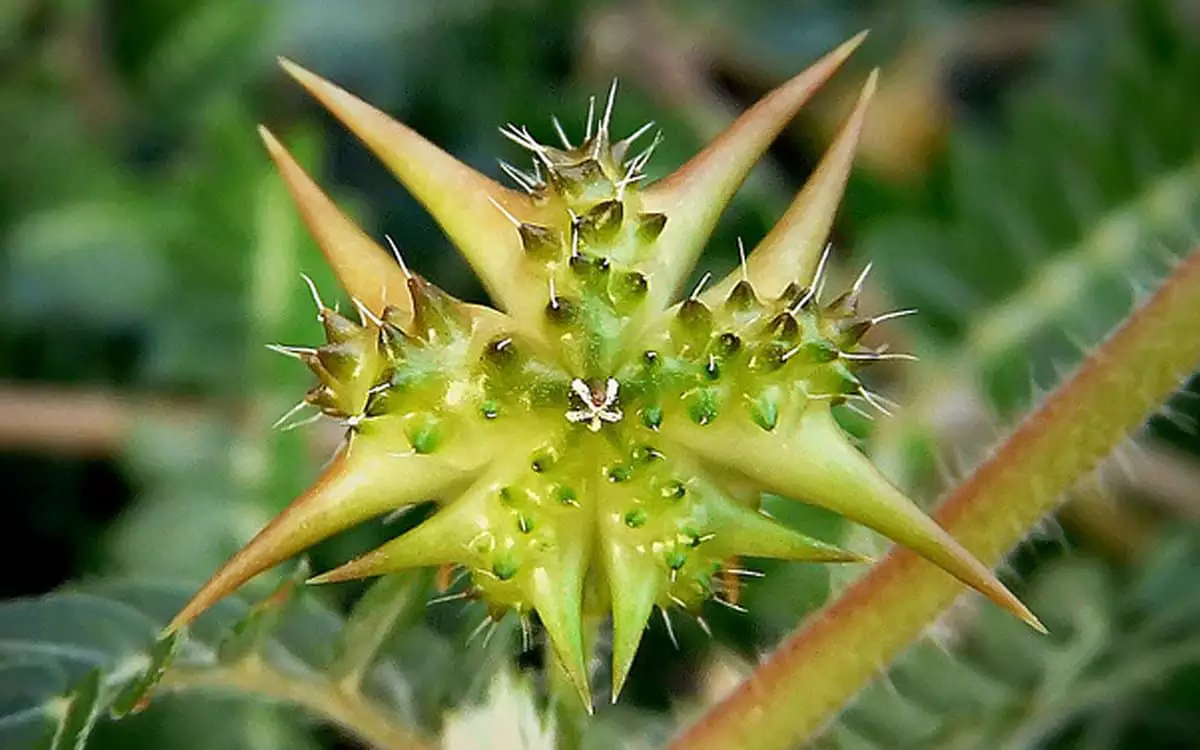
What BoostSteelX actually lists for tribulus
The sales page names this ingredient “Tribulus Terrestris — Standardized Extract.” The word “standardized” implies the extract is calibrated to a consistent level of some marker compound — typically protodioscin, a saponin researchers commonly use to standardize tribulus extracts in clinical studies. But BoostSteelX's page does not say what percentage it is standardized to, and does not give a milligram amount. Only one ingredient in the entire ten-ingredient formula gets a stated standardization percentage anywhere on the page — Ginkgo Biloba, at 24% — and tribulus is not that ingredient. Without a percentage or a dose, there is no way to compare what is in a BoostSteelX capsule against the doses used in any of the trials discussed below.
The core problem: what a study measures matters as much as what it concludes
Tribulus terrestris is one of the most commonly used plants in traditional medicine systems across Europe and Asia, and it has been studied fairly extensively in the modern clinical literature — more than muira puama, for instance, and with a reasonable number of actual randomized controlled trials in men. That is the good news. The complicating factor is that “studied for male vitality” covers several genuinely different outcome measures, and marketing copy routinely blurs them together:
- Serum testosterone — a blood test measuring the actual hormone level, the outcome implied by “testosterone booster” framing.
- Erectile function / IIEF scores — standardized questionnaires (such as the International Index of Erectile Function) measuring self-reported sexual function, which can improve independent of hormone levels.
- Libido or satisfaction scores — subjective self-report of desire or satisfaction, which is real and meaningful to the person reporting it, but is not a hormone measurement.
A single tribulus study can report a genuine, statistically significant improvement on one of these measures while showing no meaningful change on another. When a supplement page cites “clinical studies” for tribulus without specifying which outcome improved, it is very often leaning on the questionnaire-based studies while letting the reader assume a testosterone effect that the same paper did not actually find.
What the testosterone-specific trials found
A 2017 prospective study looked directly at serum testosterone level and semen parameters in men with unexplained infertility taking a tribulus terrestris botanical preparation.[4] This is one of the more direct tests of the testosterone question, in a population where a hormone effect, if real, would plausibly be relevant to fertility outcomes. Separately, a 2021 randomized, single-blind, placebo-controlled study gave CrossFit®-trained men six weeks of tribulus terrestris supplementation and measured body composition, hormonal response and perceived exertion alongside performance.[2] Studies like this, in a trained athletic population actively looking for a performance or hormonal edge, are a fair real-world test of the “boosts your T” claim precisely because that population is motivated and closely monitored.
The pattern across this kind of direct-measurement trial, and across the broader literature summarized in a 2021 systematic review of ingredients used in popular male testosterone and erectile dysfunction supplements, is that tribulus terrestris has not reliably demonstrated a significant increase in serum testosterone in men who start with normal or near-normal baseline levels.[3] That review, which evaluated the evidence base across several common T-booster ingredients rather than tribulus alone, is a useful broader check on how tribulus's evidence compares to its marketplace reputation.
What the erectile-function trials found
Where tribulus's evidence looks stronger is in trials of erectile dysfunction that used questionnaire-based outcome measures — and one trial in this group is also the clearest exception to the “no testosterone effect” pattern described above. A 2026 systematic review and meta-analysis of randomized trials specifically evaluated tribulus terrestris across eight randomized trials in men with erectile dysfunction. It found a pooled improvement on both the short and long forms of the International Index of Erectile Function (IIEF-5 and IIEF-15) compared with placebo — but in that same pooled analysis, total testosterone was not significantly different between the tribulus and placebo groups.[1] A separate, earlier placebo-controlled study took a different population: men with late-onset hypogonadism, meaning low baseline testosterone by definition. Over three months, that trial reported not only a significant improvement in erectile-function scores but also a statistically significant rise in total testosterone (p < 0.001) in the group taking tribulus versus placebo.[5] That is a real, published, placebo-controlled testosterone effect, and it complicates any flat “tribulus doesn't raise testosterone” conclusion. But it comes from a single trial, in men who started with low testosterone because of a diagnosed hormonal condition, and it has not been reproduced in the larger pooled meta-analysis above or in men with normal starting levels. The honest reading is that a low-baseline, hypogonadal population may be exactly where a real testosterone signal shows up, while trials in men with normal-range starting testosterone — like the CrossFit and infertility studies below — mostly do not reproduce it.
What tribulus trials measured, at a glance
| Study | Population | Outcome measured | Finding |
|---|---|---|---|
| Suharyani et al., 2026[1] | Men with erectile dysfunction (meta-analysis of 8 RCTs) | IIEF-5/IIEF-15 scores and total testosterone | Pooled IIEF improvement vs placebo; total testosterone not significantly different between groups. |
| Fernández-Lázaro et al., 2021[2] | Trained CrossFit® athletes, 6 weeks | Body composition, hormonal response, performance | Testosterone was one of the few outcomes with a significant group-by-time effect; authors frame it as a possible recovery-related effect, not a broad performance or body-composition boost. |
| Kuchakulla et al., 2021[3] | Systematic review across T-booster ingredients | Serum testosterone (evidence synthesis) | Weak overall evidence for a reliable testosterone increase from tribulus. |
| Roaiah et al., 2017[4] | Men with unexplained infertility, normal-range baseline | Serum testosterone (total & free), LH, semen parameters | No statistically significant change in testosterone, LH or semen parameters after treatment. |
| GamalElDin et al., 2019[5] | Men with late-onset hypogonadism (low baseline T) | Total testosterone and ED/LUTS symptom scores vs placebo | Significant testosterone rise (p<0.001) and significant IIEF improvement vs placebo — the one trial here with a positive testosterone finding. |
So what should you actually conclude?
If the question is narrowly “will tribulus terrestris raise my serum testosterone number,” the honest answer from the trials that actually tested that directly is: probably not, if your testosterone is already in a normal range — the largest pooled meta-analysis and the infertility trial both found no significant difference from placebo on that measure. The one clear exception is a smaller placebo-controlled trial in men with diagnosed hypogonadism, where testosterone starts low and did rise significantly alongside symptom scores; that is a genuine finding, but it comes from one trial in a specific low-testosterone population, not a demonstrated effect for a healthy man who already has normal levels. If the question is broader — “might tribulus improve how I score on a sexual-function or satisfaction questionnaire” — there is more supportive evidence across several trials, again concentrated in men with diagnosed erectile dysfunction or hypogonadism rather than the general population. Both of those statements can be true at once, and a sales page that only says “clinically studied” without telling you which population was studied, which outcome moved, and which one didn't, is leaving out the part that actually matters for your expectations.
For BoostSteelX specifically, none of this settles what a two-capsule daily serving of its unstated tribulus dose would do, because there is no printed amount to compare against any of these trial doses. Readers who want to see the same kind of honest, measured-outcome breakdown applied to another commonly hyped ingredient in this formula may want to read our piece on L-citrulline vs L-arginine for nitric oxide, or our broader look at what a realistic testosterone booster results timeline looks like once you separate marketing claims from trial data.
Medical note: this article is general information, not medical advice, and is not a claim that BoostSteelX treats, cures or prevents erectile dysfunction, low testosterone or any other condition. Low testosterone and erectile dysfunction can both have underlying medical causes worth investigating with a doctor rather than self-treating with a supplement.
Scientific references
- Suharyani S, Amanda B, Angellee J, et al. “Tribulus terrestris for management of patients with erectile dysfunction: a systematic review and meta-analysis of randomized trials.” International Journal of Impotence Research, 2026 Jan. PMID: 40360723.
- Fernández-Lázaro D, Mielgo-Ayuso J, Del Valle Soto M, et al. “The Effects of 6 Weeks of Tribulus terrestris L. Supplementation on Body Composition, Hormonal Response, Perceived Exertion, and CrossFit® Performance: A Randomized, Single-Blind, Placebo-Controlled Study.” Nutrients, 2021 Nov 7. PMID: 34836225.
- Kuchakulla M, Narasimman M, Soni Y, et al. “A systematic review and evidence-based analysis of ingredients in popular male testosterone and erectile dysfunction supplements.” International Journal of Impotence Research, 2021 Apr. PMID: 32358510.
- Roaiah MF, Elkhayat YI, Abd El Salam MA, GamalEl Din SF. “Prospective Analysis on the Effect of Botanical Medicine (Tribulus terrestris) on Serum Testosterone Level and Semen Parameters in Males with Unexplained Infertility.” Journal of Dietary Supplements, 2017 Jan 2. PMID: 27337519.
- GamalEl Din SF, Abdel Salam MA, Mohamed MS, et al. “Tribulus terrestris versus placebo in the treatment of erectile dysfunction and lower urinary tract symptoms in patients with late-onset hypogonadism: A placebo-controlled study.” Urologia, 2019 May. PMID: 30253697.
Frequently asked questions
Does tribulus terrestris raise testosterone?
Most controlled human trials that measured serum testosterone directly did not find a significant increase from tribulus terrestris in men with normal baseline testosterone, including the largest published meta-analysis. Several trials instead measured subjective outcomes such as erectile function scores, satisfaction or libido, and some of those found improvement even without a corresponding rise in measured testosterone. There is one notable exception: a smaller placebo-controlled trial in men with diagnosed hypogonadism (low starting testosterone) did find a statistically significant testosterone rise alongside symptom improvement, so the exception exists in that specific low-baseline population, but it has not been shown in men who start with normal testosterone levels. Conflating symptom-score improvement with a hormone increase is still the most common way tribulus is oversold.
What did tribulus studies actually measure, if not testosterone?
Many tribulus trials in men with erectile dysfunction used standardized questionnaires such as the International Index of Erectile Function (IIEF) or similar satisfaction and sexual-function scales, rather than drawing blood for serum testosterone. A study can report a statistically significant improvement on a symptom questionnaire while showing no significant change in measured testosterone — both results can be true of the same trial.
How much tribulus does BoostSteelX contain?
BoostSteelX's sales page lists tribulus terrestris as a “Standardized Extract” but does not print a milligram amount or state what marker compound (such as protodioscin) it is standardized to. No Supplement Facts panel exists for this product in the sources available, so the dose cannot be confirmed or compared against the doses used in the studies discussed here.
Is tribulus terrestris safe?
In the clinical trials reviewed, tribulus terrestris was generally well tolerated at studied doses, with mild gastrointestinal complaints being the most commonly reported issue. It is not a substitute for medical evaluation of erectile dysfunction or low testosterone, both of which can have underlying causes that a supplement will not address. Speak to a healthcare professional before starting any supplement, especially if you take medication.
Related reading
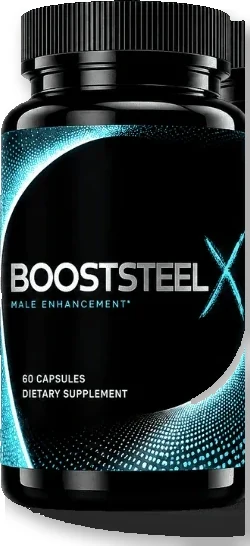
Order BoostSteelX
Ten botanicals and amino acids listed by the seller, including tribulus terrestris extract, in a two-capsule daily serving.
Order BoostSteelX